Sub-Saharan Africa is set to return to stronger, and less volatile, economic growth over the next couple of years. The economy is projected to grow by 3.7 per cent in 2019 and by 3.9 per cent in 2020, up from an average annual growth rate of 2.2 per cent over the period – World Employment Social Outlook: Trends 2019– ILO 2016–18. (IMF, 2018c and 2018d).
This recent report published by the International Labour Organization suggests a rather positive posture of growth of many years of economic downwardness for the sub-region and especially for young people. However, the reality of this is gloomy for a ‘recourse-intensive’ country like Nigeria because even though employment rate is expected to grow by 3.1% within the Sub-Sahara region, it is projected not to match the vast growth in the labour force – as a result, the number of unemployed persons in Sub-Sahara Africa is projected at 1.9 million in 2020. This is a major set-back.
The good news is that the employment rate within the region will keep growing and younger people will have the opportunity to find decent jobs or found an enterprise. But the responsibility to create decent jobs and equip young people to be relevant for the available jobs is dependent on the active participation of public, private and the third sector.
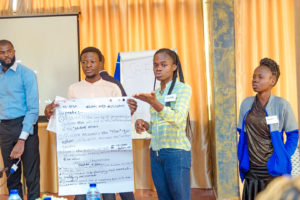
LEAP Africa; as an ecosystem builder, is committed to equipping and empowering young Nigerians with tools and resources as well as create a platform to access work-based learning opportunities that will enable the effective transition into meaningful employment or enterprise. Between Tuesday 28th – Friday 31st January 2020, LEAP AFRICA through the iLEAD Programme organized the second phase of training for 19 Fellows in the programme.
The programme, which comprised of two sessions – training and panel session- featured activities that equipped participants with 21st Century employability skills such as problem-solving, productivity, collaboration/teamwork, leadership, lifelong learning, professionalism, and social responsibility. It also exposed Fellows to best practices in CV building, how to write business proposals, how to craft business model canvas and so on. The panel session was an insightful moment for the Fellows as panelists focused their conversations around available economic opportunities in the labour market and unveiled working strategies to approach such opportunities.
The iLEAD programme has been designed to provide youth drawn from the National Youth Service Corps in the Federal Capital Territory, Abuja with leadership, life and employability skills to achieve personal success and transition into higher education or paid employment. This training is part of activities lined up for the year-long iLEAD fellowship programme.